2009年12月29日星期二

Statement update on attempted act of terrorism on Northwest Airlines Flight 253

Statement update on attempted act of terrorism on Northwest Airlines Flight 253

26 December 2009

UCL portico

Regarding the attempted act of terrorism on Northwest Airlines Flight 253, UCL President and Provost, Professor Malcolm Grant, has issued the following statement:

”Based on information now in the public domain, we have good reason to believe that Umar Farouk Abdulmutallab, now detained in the USA, is a former UCL student who studied Engineering with Business Finance and graduated in 2008. UCL is deeply saddened by these events. This is a university founded on equality and religious tolerance, and strongly committed today to respect for human rights. We are cooperating fully with the authorities in their further investigations.“

Updated: 18.00, 27 December

In addition, UCL Department of Mechanical Engineering have issued this statement:

"Given the intense media interest surrounding Mr Umar Abdulmutallab, the Department of Mechanical Engineering, UCL, can confirm that a person of this name and description attended the Department as a full time student between 2005 and 2008, and studied for an undergraduate degree in Engineering with Business Finance. The Department's association with him ended in June 2008 after he successfully graduated.

"The Department in common with UCL admits students solely on the basis of their academic abilities without regard to a person's political, racial or religious background. During his time on the course Mr Abdulmutallab never gave his tutors any cause for concern, and was a well mannered, quietly spoken, polite and able young man. We are deeply shocked by the recent news concerning Mr Abdulmutallab.

"The Department is currently cooperating with the authorities in their investigations, and as such cannot issue any further information covering Mr Abdulmutallab's period at UCL."

Updated: 19.00, 28 December

美炸機案 嫌犯母校震驚 英政府調查 【12/29 10:15】

〔中央社〕美國西北航空炸機未遂案嫌犯阿布杜穆塔拉布的母校倫敦大學學院說,阿布杜穆塔拉布在校期間是一名謙恭有禮的好學生,從不讓師長擔心,對於他涉案,校方感到十分難過與震驚。

倫敦大學學院(University College London,UCL)昨天發表聲明指出,阿布杜穆塔拉布(Umar FaroukAbdulmutallab)2005到去年在UCL攻讀機械工程,在校期間是一名「溫文有禮,講話輕聲細語,而且有能力的學生」,對於他的 涉入炸機案,教職員都感到「十分震驚」。

UCL 機械工程系發表聲明指出,「機械工程系可以證實,阿布杜穆塔拉布2005到去年在本系就讀大學部,同時修習企業財務課程,去年他成功結束所有的課程畢業」。

聲明說,UCL 與機械工程系不過問學生的政治、種族或宗教背景,只考慮學生的學術能力,「阿布杜穆塔拉布就讀期間從未帶給授課老師任何的麻煩,而且是溫文有禮,講話輕聲細語,功課佳的年輕人」。

對於炸機未遂案爆發後,媒體密集的報導,UCL 教職員都感到極為震驚;機械工程系目前正與政府密切合作進行調查。

23歲的奈及利亞籍男子阿布杜穆塔拉布的家人表示,他是在倫敦就讀時參與恐怖組織活動,立場轉為激進,英國警方與情報單位正全力調查他在英國期間所參加的活動與接觸的朋友,目前並開始搜查他求學時在倫敦市中心的高級公寓住所。


Options to end hospital parking charges

Options to end hospital parking charges

Cannot play media.You do not have the correct version of the flash player. Download the correct version

Andy Burnham: ''There is scope to develop a fairer approach to hospital car parking''

Andy Burnham has outlined proposals to phase out hospital parking charges for in-patients and some out-patients which he says have caused "great resentment".

The health secretary pledged a "fairer" system for relatives and friends of people admitted to hospital in England.

He is looking at whether to abolish fees for all in-patients' visitors - or just those admitted for a long stay.

For out-patients he will look at free parking, or a cap on charges, for those who need to make regular appointments.

Parking is already free at most hospitals in Scotland and Wales and for certain priority groups of patients in Northern Ireland.

'Frankly confusing'

Mr Burnham announced in September he wanted to phase out over three years charges at hospitals in England for patients who are admitted.

But the eight-week consultation - which runs until 23 February - will also look at charges for out-patients who have to make regular appointments - like cancer patients with regular chemotherapy sessions.

Hospital car park (library photo)
Policies on hospital car parking charging policy differ across the UK

Mr Burnham told the BBC: "I think the time has come for a fairer, more consistent approach to parking across the NHS. Frankly I think it's confusing at present, there are a wide variety of parking schemes."

He added it had "caused great resentment" but the government had to ensure that the costs of running secure car parks were covered.

NHS trusts have argued that some parking charges are necessary to ensure health funds are not diverted towards managing and maintaining car parks.

'Unnecessary tax'

Mr Burnham said: "We want to have the consultation so we get the balance right, that we don't ask the NHS to do something at a time when there is pressure on its finances that it can't afford. But I believe what we're proposing is affordable."

When Mr Burnham announced plans to phase out charges for in-patients in September, Macmillan Cancer Support raised concerns that it would not apply to people with cancer having treatment as out-patients.

If the NHS cannot afford free parking for all patients, then at least more concessions should be made for long-term sufferers
Edmund King
AA president

The charity's head of campaigns, Mike Hobday, told the BBC on Tuesday: "Macmillan is really pleased that this consultation could mean free parking for cancer patients who have to go to hospital on average 53 times during the course of their treatment.

"What we need of course is for all political parties to commit to abolishing this unnecessary tax."

The average charge per hour for hospital car parks in England in 2008/9 was £1.09.

AA president Edmund King said: "Of course we need to manage parking spaces in hospitals, particularly in urban areas. However, for cancer sufferers undergoing chemotherapy and for other people who must attend on a day-patient basis, the costs soon add up.

"Also, due to the risk of infection, many patients are unable to use public transport. If the NHS cannot afford free parking for all patients, then at least more concessions should be made for long-term sufferers."

2009年12月22日星期二

為什麼我們必須反共抗馬

為什麼我們必須反共抗馬--本周周三23日起停刊數日--版主在某新聞管制之國家

Topsy-Turvy Christmas Foolery

Topsy-Turvy Christmas Foolery

Mark McNulty

Heyyy: Henry Winkler is Captain Hook in a “Peter Pan” pantomime in Liverpool, England. These musical comedies are a Christmas tradition dating to 1607. More Photos >


Published: December 21, 2009

LIVERPOOL, England — Yes, it is the Fonz. Yes, he is wearing a Puss ’n Boots hat and a frock coat that Louis XIV would have been proud to call his own. Yes, he is glaring at the audience and hissing, “If you don’t shut up, I’m going to come down and poison your ice cream.”

Even more interestingly, he is doing it of his own free will.

To the untrained observer, Henry Winkler’s appearance as the villainous Captain Hook in a pantomime of “Peter Pan” here might seem to be a dismaying comedown — akin to, say, Leonard Nimoy’s appearing in a production of “You’re a Good Man, Charlie Brown” in Buffalo.

But that would be a complete misreading of the situation.

Pantomimes — recastings of old children’s stories with vaudeville, audience participation, puns, singing and cross-dressing — are an honorable, even essential, part of the British Christmas season. Meant to appeal to all ages, they are enduringly popular, flamboyantly silly and, if done well, hugely lucrative. They often feature big stars.

In 2004 and 2005 the great Shakespearean actor Ian McKellen slapped on a frilly dress and a trowelful of makeup to play the Widow Twanky in “Aladdin.” (Most pantomimes feature a man in drag, a character known generically as the dame.) In 2007 Stephen Fry wrote a double-entendre-laden pantomime of “Cinderella” at the Old Vic, and a year earlier the provocative playwright Mark Ravenhill revised the classic pantomime “Dick Whittington and His Cat” for the Barbican.

Occasionally, American actors appear, lured by the prospect of a big paycheck and the comforting thought that if they make fools of themselves, nobody back home will know. In recent years Steve Guttenberg, Mickey Rooney and Patrick Duffy have all played Baron Hardup in productions of “Cinderella.” This year Pamela Anderson, sparsely clad as always, is performing as the genie in “Aladdin” in London.

Mr. Winkler is a perennial. This is his fourth year as Captain Hook, after productions in Woking, Wimbledon and Milton Keynes.

“This is ‘Peter Pan’ bent to the left,” he said. “There’s dancing, there’s singing, there’s sword fighting — every single thing I learned at Yale in the drama school I’m applying here.” The way the children in the audience boo at him; the way they yell, “He’s behind you!” when the ticking crocodile appears; the way they clap to demonstrate their belief in fairies and restore Tinkerbell to life — he revels in it all.

Mr. Winkler, 64 and soft-spoken, was chatting in his dressing room at the 2,381-seat Empire Theater the other day after a sold-out evening performance. (He is doing two shows a day, six days a week, through Jan. 3.) He was wearing civilian corduroys. His fake hook was neatly stowed; his long black wig was next door, being recurled.

When he was first asked to be in a pantomime, Mr. Winkler said, he had no idea what the producers were talking about.

“They called me and said, ‘Listen, it’s a pantomime; you don’t know what it is, and there’s no way to explain it,’ ” he said. “ ‘You’ll play Captain Hook.’ ”

He had a moment of doubt. “I thought to myself, ‘Well, I don’t know if the English actors would accept an American,’ ” he recalled. “ ‘I don’t know whether they’d allow me to take part in this tradition they’ve had since 1607.’ So the easy way would have been to say no, and then I could sit at home. And then I thought, ‘You know, you have got to take a shot at it.’ ”

What he found, he said, was that “warmth and respect, kindness and professionalism are international.” Also, he likes his band of dancing pirates and enjoys thinking up new insults with which to establish his dastardliness. In its review, The Liverpool Daily Post praised his “swashbuckling energy” and called him a “wonderfully hammed-up pantomime villain.”

Mr. Winkler is hugely famous here; “Happy Days,” it turns out, was as big a deal in Britain as it was in the United States. People stop him in the street. “Mostly, they just want hugs,” he said. Once a busful of Liverpool commuters drove past, all waving at him. The Liverpool Echo chronicles sightings around town in a “Winkler Watch” column.

It is not as if he needed the work. Mr. Winkler appears regularly in movies and on television, most memorably in recent years as Barry Zuckerkorn in the television series “Arrested Development.” He is also the co-author of the Hank Zipzer series, about an underachieving fourth grader, which has sold about three million copies, he said.

“Happy Days” ended its first run 25 years ago, but wherever Mr. Winkler goes, the Fonz goes too. That leather-jacketed rebel was the show’s best-known character. “He is the foundation of the rest of my life,” Mr. Winkler said.

Pantomimes reflect a strange paradox of the British national character: that people can be at once so uptight and so gleefully, childishly uninhibited. Amid all the mayhem, “Peter Pan” is full of topical references to things like the recession and the television talent show “The X Factor.” For audience members of a certain era, there are also quicksilver allusions to “Happy Days.” In one scene Captain Hook shifts his weight back, turns his palms up and intones, “Heyyy” — still the essence of cool after all these years.

After the interview, Mr. Winkler signed autographs for a clutch of fans shivering by the stage door. Then he climbed into a car and was whisked away, ready to return 13 hours later.

“Are we doing ‘Macbeth’?” he asked rhetorically. “No, but we’re doing a wonderful, joyous production of ‘Peter Pan.’ I cannot imagine that you could have more fun than doing this.”

2009年12月21日星期一

Brown to face three televised election debates

Brown to face three televised election debates

Gordon Brown, David Cameron and Nick Clegg
Previous attempts to get leaders to do a TV debate have failed

The UK looks set to have its first ever televised leader election debates after a deal was struck between the three big parties and the main broadcasters.

Labour's Gordon Brown, Conservative leader David Cameron and Lib Dem leader Nick Clegg have agreed to go head-to-head in a series of three debates.

The first will be on ITV, the second on Sky and the third on the BBC.

There will also be separate debates involving the main parties in Scotland, Wales and Northern Ireland.

Earlier the SNP and Plaid Cymru said they should be allowed to take part in the main debates.

Live presidential debates in the US and other countries have provided many of the key moments of election campaigns and are seen as having raised voters' interest.

Themed

But in the UK, despite many calls for such debates to be held, there has never been agreement reached between leaders and with broadcasters.


These debates will be an opportunity to start re-engaging people with politics
Nick Clegg

The programmes will be broadcast in peak time during the General Election campaign and will be between 85 and 90 minutes long in front of a selected audience.

ITV's Alastair Stewart will host the first, Sky's Adam Boulton the second and the BBC's David Dimbleby will host the third debate.

The format will be the same for each, although about half of each debate will be themed.

There will be separate debates held in Scotland, Wales and Northern Ireland among all the main parties, which will be broadcast on BBC Scotland, Wales and Northern Ireland and across the UK on the BBC News Channel.

And following the prime ministerial debates, all political parties which have significant levels of support at a national level will be offered opportunities across BBC output to respond to the issues raised in the debate.

Prime Minister Gordon Brown told the Daily Mirror: "I relish the opportunity provided by these debates to discuss the big choices the country faces.

Cannot play media.You do not have the correct version of the flash player. Download the correct version

"Choices like whether we lock in the recovery or whether we choke it off; whether we protect the NHS, schools and police or whether we put them at risk to pay for tax cuts for the wealthy few."

Speaking at a public meeting, Conservative leader David Cameron said: "I have always believed in live television debates.

"I think they can help enliven our democracy, I think they will help answer people's questions, I think they will crystallise the debate about the change this country needs."

'Vigorous debate'

Liberal Democrat leader Mr Clegg said he was "delighted".

"After a terrible year for politicians because of the expenses scandals, these debates will be an opportunity to start re-engaging people with politics... I hope an open, honest and vigorous debate will encourage more people to have their say at the ballot box."

The election is widely expected to be held on Thursday 6 May although there has been speculation that it could be called for 25 March instead.

Cannot play media.You do not have the correct version of the flash player. Download the correct version

Cameron 'delighted' about TV debate

Ric Bailey, the BBC's chief adviser on politics, said a lot of work had been done to get agreement and there was still some way to go on the detail.

He added: "I think it is quite significant in the sense that it's never happened before and all three of the biggest parties in the UK have agreed to do it."

Discussions will resume in the new year to finalise detailed arrangements for the debates.

Opposition leaders regularly call for TV debates in the run-up to general elections but while they are commonplace in the US, they have not been held in Britain.

Tony Blair refused to take part in one when he was prime minister and Mr Brown has previously argued that the situation is different in the US, where presidents are directly elected.

'Completely undemocratic'

British prime ministers have argued that they are questioned regularly, at prime minister's questions and in statements to the Commons.

Critics also say such debates overly personalise a UK election campaign, where people vote for a local MP rather than directly for a leader.

There have also been questions about whether the debates should be a head-to-head between the leaders of the two largest parties or whether the Lib Dem leader should also be included.

Earlier, before the announcement was made that debates would be made available to other parties, the SNP and Plaid Cymru said they should be allowed to take part in the main debates.

Scottish National Party leader Alex Salmond said he would be seeking "guarantees of inclusion from the broadcasters, given their inescapable duty to ensure fairness and impartiality in election-related coverage in Scotland.

"It is entirely unacceptable to Scotland as well as to the SNP for the broadcasters to exclude the party that forms the government of Scotland - and indeed is now leading in Westminster election polls," he said.

And Plaid Cymru's Westminster leader Elfyn Llwyd said it was "completely undemocratic" as it would give the main parties an unfair advantage. He said he would complain to the Electoral Commission.

"Both Plaid Cymru and the SNP are in government in the respective devolved administrations and it is an insult that such important political voices are to be left out of such a historic event," he said.

2009年12月19日星期六

At Home in Georgian England By Amanda Vickery

Bed, Bath and Beyond


Published: December 16, 2009

“He allows me not the prviliedg to place a Table or Stool but where he Fancies,” Lady Sarah Cowper complained about her husband, Sir William Cowper, in 1706. He treated her, she insisted, “as a Concubine not as a Wife,” by refusing to allow her to pick out wallpaper or decorate the drawing room. This was more than just a dispute about interior decoration. Though bound by their husbands’ authority, 18th-century women were expected to be the domestic managers of their family’s affairs. By not consulting his wife in these matters, Cowper revealed himself to be an “absolute tyrant.”

Skip to next paragraph
Engraving, British Museum; from “Behind Closed Doors”

“The Comforts of Matrimony — A Smoky House and Scolding Wife,” 1790.

BEHIND CLOSED DOORS

At Home in Georgian England

By Amanda Vickery

Illustrated. 382 pp. Yale University Press. $45

The pages of “Behind Closed Doors” are filled with such squabbles. Amanda Vickery, a reader in history at Royal Holloway, University of London, finds them in fashionably decorated Yorkshire mansions and dirty London lodgings, in downstairs kitchens and gilded parlors and gloomy garret rooms. She opens resolutely shut doors and peeps into the private lives of servants, aristocrats and the “polite and middling sorts” — merchants, clergy members, doctors and lawyers. “Behind Closed Doors” examines what privacy meant in 18th-century Britain and how people negotiated both their domestic space and their domestic relationships.

Vickery’s greatest achievement is to upend the notion that the home was divided into separate spheres in which men were responsible for brick and stone while women ruled over domestic life. Instead, Vickery brilliantly shows that these boundaries were fluid and mutable. Lady Sarah Cowper’s husband meddled with the curtains in the drawing room, and Jonathan Swift was smitten with porcelain, claiming to “love it mightily,” while James Hewitt, the mayor of Coventry, spent happy hours matching wall colors to patterned curtains and upholstery fabrics.

There is a plethora of studies about male patronage of architecture and the decorative arts in the Georgian period, but it may come as a surprise that bachelors, husbands, widowers and brothers had such obsessions with the home front. “Those who are incapable of relishing domestic happiness can never be really happy at all,” one husband declared after more than 30 years of marriage.

An entire chapter is devoted to bachelors who, instead of parading around town as frivolous dandies — as they have been portrayed in the past — often longed for marriage. Many despised their makeshift accommodations and take-away meals (by 1700, the commercial provision of food employed more people than most other sectors), as well as crowded taverns and a maid who might take “my sheets to her own use.” When comparing bachelorhood to marriage, Dudley Ryder, the son of a linen draper, decided he wanted a “constant companion” who would be “always ready to soothe me, take care of me.” Marriage, Vickery writes, “announced and confirmed men’s adulthood” and marked the beginning of a well-managed domestic life. Just because men didn’t fill their diaries with their notion of “homeliness” doesn’t mean they weren’t interested in it, nor does it deter Vickery from trying to find out the details. Few writers have such a talent for transforming the driest historical source into a gripping narrative, for teasing stories from account books, inventories, ledgers and pattern books.

Some of her most fascinating sources are the records of the Old Bailey, the main criminal court in London. During proceedings dealing with theft, witnesses often gave descriptions of their valuables and the places of safekeeping within the home. These records allow Vickery to chart the fraught and difficult negotiations that were necessary to secure at least some bit of privacy behind the uniform facade of the terraced 18th-century house. Since a maid didn’t have her own room, she might have only a small wooden box in which to lock her few belongings; a lodger might put his coins in the hollow leg of his bed to hide it from his preying landlady. Others protected their private property in secret drawers and boxes, or behind the wainscot. Such “personal receptacles,” Vickery writes, “stood proxy for individuality.” This battle over the frontiers of privacy wasn’t confined to servants and lodgers. Wealthy aristocratic women often had closets that functioned as private sanctuaries into which no one — not even their husbands — would intrude. “Behind Closed Doors” carefully describes how servants, married women, spinsters and widows struggled for a space they could call their own.

According to Vickery, these negotiations are at the core of domestic life in Georgian England and became part of “setting up home” — sometimes even before marriage. Mary Martin, the fiancée of a colonel, asserted her role as future wife and domestic manager when she oversaw the refurbishment of his London house. When her fiancé’s decorator painted a room in a shade of white that wasn’t quite what she had envisaged, she flew into a rage and “frighten’d him out of his Wits.”

What went on behind closed doors after her wedding (and most others) has been difficult to ascertain, but Vickery found three rare sets of matching account books for husbands and wives. (One was in my possession, for which I’m thanked in her acknowledgments.) The picture that emerges from the “His and Hers” chapter is that of efficient wives responsible for child-related expenses — schooling, dancing masters, clothes — as well as groceries, the husband’s personal linen, laundry and servants’ wages. Unsurprisingly, the husbands dealt with expenses related to their estates, loans and stables, but also bought most luxury goods. In one of the three examples, most of the family’s money flowed through the wife’s account book, with the husband receiving a ­rather enormous “allowance.” Though women have often been accused of ­“fetishistic self-indulgence,” these ­account books reveal husbands who bought “dandyish” waistcoats and women who didn’t indulge in new gowns.

“Behind Closed Doors” also leads the reader into the rooms of spinsters and widows, an important inclusion, since in 1700 the average marriage lasted only 10 years. Of the two, spinsters were worse off, often at the mercy of brothers or fathers. Their lives, Vickery writes, could be “one long tour of kin,” while widows (if they were wealthy) frequently enjoyed greater freedom than during their marriages. Martha Dodson, the widow of the high sheriff of Berkshire, for example, was clearly having fun, constantly redecorating her house even when she was in her late 70s.

“Interiors do not easily offer up their secrets,” Vickery writes but then succeeds in getting them to do just that. The blue and yellow wallpaper the depressed spinster Gertrude Savile bought in 1739 illustrates that she was very much in tune with the latest fashion, while her disapproval of the “debauchery in London” was embroidered into her chairs — on which she had copied images from Hogarth’s famous series “Harlot’s Progress.” At the same time, her lack of teapots and other china bears witness to her social isolation and “dread of company.”

If until now the Georgian home has been like a monochrome engraving, Vickery has made it three dimensional and vibrantly colored. “Behind Closed Doors” demonstrates that rigorous academic work can also be nosy, gossipy and utterly engaging.

Andrea Wulf is the author of “The Brother Gardeners: Botany, Empire and the Birth of an Obsession.”

THE TWILIGHT YEARS: The Paradox of Britain Between the Wars

After the War, Before the War

Topical Press Agency/Getty Images

February 1922: A parcel delivery run in a vanished England.


Published: December 16, 2009

“It is a fact so familiar that we seldom remember how very strange it is,” the historian George N. Clark wrote in 1932, “that the commonest phrases we hear used about civilization at the present time all relate to the possibility, or even the prospect, of its being destroyed.”

In “The Twilight Years,” his thought-­provoking and illuminating new study of the interwar period, Richard Overy contends that before 1914 the British believed they had conquered the world and would rule it forever. After World War I, a wrecked generation had to pick up the pieces of that world and ask what went wrong. It is this process that occupies the book, which successfully adopts a broad-brush approach to cultural life without obscuring gemlike details. During the 1920s and ’30s, Britain saw itself as a civilization in crisis, facing the ominous dawn of a new Dark Age.

Skip to next paragraph

THE TWILIGHT YEARS

The Paradox of Britain Between the Wars

By Richard Overy

Illustrated. 522 pp. Viking. $35

If this feels familiar, Overy is not surprised. “For some years now,” he writes, “there has existed a popular belief that the Western world faces a profound crisis.” A professor of modern history at the University of Exeter, Overy argues rather sternly that, in fact, the West today enjoys a far more secure and wealthier way of life than at any point in history. By contrast, during the interwar years the British — then occupying a position approximately analogous to modern Americans in terms of global influence and responsibility — had indisputable cause for fear. Nearly a million British subjects were killed during World War I, and soon afterward fissures began to show in the empire. At the beginning of the ’30s, the world faced a serious financial downturn, and the rise of new and deadly forms of political extremism. When Hitler came to power in 1933, Britain, France and Spain were, as Overy points out, the only major democracies left in Europe.

Skeptic though he may be about equating interwar Britain with the modern United States, Overy is clearly tickled by the parallels. He is too sophisticated a historian to belabor them, but from a chapter entitled “The Death of Capitalism” to his account of the self-proclaimed agents of morality attempting to “cure” homosexuality, there is plenty here that strikes a chord. On that supposed cure, the editor of the prestigious medical journal The Lancet was convinced that proper treatment could turn any homosexual into “quite a cheerful citizen” — though it is hard to imagine many of the unfortunate subjects being cheered up by the combination of vigorous exercise and cold baths he prescribed.

The economy of the early 1930s was, as John Maynard Keynes put it, in “a frightful muddle,” and capitalism itself was increasingly seen to be riddled with flaws. Debate raged about whether it should be reformed or junked. “The signposts of economic and social evolution point inevitably from capitalism to socialism and communism,” the young economist Maurice Dobb wrote. He became a prominent intellectual, accepting a position at Trinity College, Cambridge: as Overy acidly notes, “the college tolerated his Marxism and he, evidently, tolerated its opulence.”

Dobb was unusual. Though a more moderate socialism did come to hold political sway in Britain, the nation consistently rejected the extremist politics that swamped the rest of Europe. Even at the outbreak of World War II, Communist and fascist parties counted their combined memberships at around 40,000 — less than one percent of the population — and few of those were active. In 1933, Wyndham Lewis’s sympathetic biography of the new German chancellor, Adolf Hitler, was displayed in a famous bookshop on London’s Charing Cross Road. Twice a day, the window had to be hosed down to remove all the accumulated spittle.

While British politics remained resolutely mainstream, science flirted with the fringes. Social hygienists recommended that girls eat cakes and porridge to avoid sexually awakening themselves. Psychoanalysts applied their theories to “the insanity of nations.” Eugenicists claimed that a “defective” generation was being bred, arguing that criminality as well as physical and mental characteristics were inherited via “germ plasm.” Those classed as defective could include vagrants, inebriates, drug addicts, prostitutes, perverts, imbeciles, deaf-mutes, the blind, the insane and epileptics — totaling, in one estimate, 9.5 million people, almost one-quarter of Britain’s population. The birth control pioneer and eugenicist Marie Stopes, concerned with the decline in what she called the “imperial race,” disowned her own son because he married a woman who wore spectacles.

The outbreak of the Spanish Civil War in 1936 pitted the democratic republic against nationalist authoritarians. The conflict made a profound impact on Britain — one which, as Overy rightly says, has often been underrated. His chapter on it is one of the most affecting sections of the book, telling of how 4,000 Britons — scientists, philosophers, poets and manual workers alike — volunteered to fight Fascism in a country to which they had no connection, simply because they believed it to be a just cause. George Orwell was among those who went, hand grenades dangling from his belt, accompanied by a small dog with the initials of the Marxist party to which he belonged painted on its side. Orwell, Overy says in the course of a particularly winning description, was “so fastidious about completing his toilet each day that if there was no water to shave in, he would shave in wine.” That certainly brings a whole new dimension to Champagne socialism. Orwell was wounded in action, shot through the neck by a nationalist sniper. He was lucky to survive. Many did not.

Such had been the horrors of World War I that pacifism, and the avoidance of war by any means, was a dominant theme of the interwar years. The Spanish Civil War and the enormities of the Nazi regime in Germany changed that. “I hate war with as much venom as you do,” the novelist Storm Jameson wrote to her pacifist colleague Vera Brittain, “but I have come to believe that there are certain values for which it may be necessary to fight.” When the crisis of civilization really did arrive in the shape of World War II, there was no choice about how to deal with it. Britain fought for its liberty and its life.

“The Twilight Years” was published in England as “The Morbid Age.” Overy notes that Leonard Woolf was obliged to retitle some of his books for American publication: “Barbarians at the Gate” became “Barbarians Within and Without,” and after some debate “Quack Quack,” his critique of capitalism, became “Quack-Quack,” with a hyphen. These may be trifling, but Overy’s British title is more memorable and more appropriate to the content than the American one. It is hard to see why a publisher would prefer “The Twilight Years” — unless putting the word “Twilight” on the cover is enough to persuade Stephenie Meyer’s audience of teenage vampire fans to buy scholarly British cultural history.

Whatever it may be called, Overy’s study of British culture between the wars is absorbing and unexpectedly moving. Some of its stories may haunt the reader long after the book has been closed, and not just the morbid ones. This reviewer has been unable to forget the June 1939 survey sent out to all medical personnel of the British Psycho-Analytical Society, asking them to state preferences for their wartime service — whether they would rather do hospital work, emergency work, work with children or work with adults. Ernest Jones, the 60-year-old doyen of British psychoanalysis, sent back his form with a simple declaration scrawled at the bottom: “Ready for anything. E. J.” Perhaps that is a clue to why, despite the all-pervading sense of crisis, Britain survived its twilight years — and the catastrophic war that followed.

Alex von Tunzelmann’s latest book is “Indian Summer: The Secret History of the End of an Empire.”

Eurostar train stuck between Paris and London

Eurostar train stuck between Paris and London

Location of Ebbsfleet on the Channel Tunnel link

A special Eurostar service from Paris which became stranded near Ebbsfleet in Kent on Saturday night has finally arrived at London's St Pancras station.

Passengers said there was no heating and lighting, and food ran out.

Earlier, five trains were stuck in the Channel Tunnel, trapping more than 2,000 people for up to 16 hours.

Eurostar said special trains had been laid on on Saturday night to transport as many passengers as possible between London and Paris and Brussels.

'Really uncomfortable'

Eurostar said the train initially broke down soon after leaving the tunnel.

A second train was sent to pull it to London but was unable to climb a steep incline at Thurrock viaduct.

The trains returned to Ebbsfleet where the passengers were taken off the first train and transferred to the rescue train which went on to London alone.

Passenger Natasha Seal-Jones, from Belper, Derbyshire, told the BBC News website: "It was really cold on the train at the beginning then it started to get really hot. It was really uncomfortable.

"There was no food available whatsoever, and hardly any drinks. When we asked questions we weren't getting any response."

Two special Eurostar services ran on Saturday, one from Paris to London and another the other way.

The trains that became stuck in the tunnel suffered electrical failure due to freezing conditions.

Police appeal

Eurostar ran a limited service but later cancelled three of the four trains due to leave London on Saturday and scrapped all services for Sunday.

It said the cancellations were made due to ongoing concerns with the weather.

Some test trains will run on Sunday but will not carry passengers.

A Eurostar spokesman said: When you have severe cold and snow even if you are operating within speed restrictions, which we were yesterday afternoon and evening, you do get a build-up of snow under and around the train and when you enter the tunnel you get water and at the end of the day these are electric trains."

Nirj Deva, Conservative MEP for the South East of England, has called on Eurostar chief executive Richard Brown to stand down.

Mr Deva said: "I have been watching the reports of Eurostar's astonishing incompetence throughout the day, and first of all, I must express a certain solidarity and sincere sympathy with the unfortunate travellers who were left for up to over 15 hours without water or food. I share their outrage 100%," said Mr Deva.

"This is simply disgusting. Under EU law, livestock such as cattle, pigs, sheep or horses aren't allowed to travel without access to water for more than eight hours. We don't even treat animals like Eurostar treats its customers."

Meanwhile, police have urged motorists to stay away from major routes around Dover and Folkestone unless their journey is essential.

Continued delays are expected on the M20 and other routes because of the tunnel problems and severe weather preventing ferries disembarking at Calais.

Flights were disrupted after heavy snow in parts of the UK and Europe.

Airline Easyjet is expecting more disruption on Sunday, with further snowfall predicted.

The Port of Calais was closed to freight traffic, and there were delays for motorists heading to Dover and Folkestone.

An intensive ferry service will run from Dover to Dunkirk, Boulogne and Calais through the night to try to clear the backlog of traffic. A severe weather warning is in place for Northern Ireland for Sunday, and northern England and south-west Scotland are also expected to be affected by snow.

UK sees sharp increase in measles

Inside Europe | 19.12.2009 | 22:05

UK sees sharp increase in measles

Yet there are still those who refuse to have them, or to let their children be inoculated - out of fear of side effects. Now the UK is seeing a sharp increase in children falling ill with measles, following a health scare surrounding the vaccine which protects against the disease - the MMR vaccine.

Report: Lars Bevanger, London

英女王乘坐普通火車

英國‧展示節儉形象‧英女王乘坐普通火車
  • 同車旅客驚悉與英女王同車。(圖:互聯網)

(英國‧倫敦)英女王伊麗莎白二世展示節儉形象,週四(12月17日)乘坐火車到鄉郊過聖誕,單程僅44.4鎊(約馬幣247令吉),與皇家列車每程要5萬7000鎊差天共地。乘客坦言難以相信有幸與英女王同車。

83歲的英女王當天早上,戴著頭巾來到倫敦英皇十字火車站11b月台,她接過女孩送上的鮮花後,登上10時45分前往東部的火車頭等車廂。


看到英女王坐普通火車,人們很驚訝。同車旅客史密斯說:“真是難以置信!我老婆一定不相信。”但也有乘客很不滿警方沒有預早通知,在火車離開前5分鐘,要封鎖現場。

1小時35分鐘後,列車抵達金斯林站。英女王下車,轉乘座駕到桑德林姆宮,與早已抵達的菲臘親王等家人過聖誕。白金漢宮說英女王不時乘坐普通火車,11月也坐火車到劍橋郡探訪。

星洲日報/國際‧2009.12.19

2009年12月17日星期四

fish and chips

Page last updated at 02:37 GMT, Friday, 18 December 2009


The unlikely origin of fish and chips

Fish and chips

By James Alexander
BBC News

Fish and chips are a national institution - and now chippies across the country are preparing to celebrate the 150th birthday of our most famous fast food.

Winston Churchill called them "the good companions". John Lennon smothered his in tomato ketchup. Michael Jackson liked them with mushy peas.

They sustained morale through two world wars and helped fuel Britain's industrial prime.

For generations, fish and chips have fed millions of memories - eaten with greasy fingers on a seaside holiday, a pay-day treat at the end of the working week or a late-night supper on the way home from the pub.

Few can resist the mouth-watering combination - moist white fish in crisp golden batter, served with a generous portion of hot, fluffy chips.

NUMBER OF CHIPPIES
1910: c25,000
1929: c35,000
2009: c10,000
Sources: seafish.org and Fish and Chips and the British Working Class, by John Walton

Everyone has their own preferences and tastes vary from one part of the country to another. Cod or haddock? Salt and vinegar? Pickled onion? Scraps?

Like Morecambe and Wise or Wallace and Gromit, fish and chips are a classic double act - and yet they started life as solo performers. And their roots are not as British as you might think.

The story of the humble chip goes back to the 17th Century to either Belgium or France, depending who you believe.

Oddly enough, the chip may have been invented as a substitute for fish, rather than an accompaniment. When the rivers froze over and nothing could be caught, resourceful housewives began cutting potatoes into fishy shapes and frying them as an alternative.

Around the same time, fried fish was introduced into Britain by Jewish refugees from Portugal and Spain.

The fish was usually sold by street sellers from large trays hung round their necks. Charles Dickens refers to an early fish shop or "fried fish warehouse" in Oliver Twist (1839) where the fish generally came with bread or baked potatoes.

North or south?

Who first had the bright idea to marry fish with chips remains the subject of fierce controversy and we will probably never know for sure. It is safe to say it was somewhere in England but arguments rage over whether it was up north or down south.

TAKEAWAYS SERVED ANNUALLY
1. Burgers 748m
2. Chinese/Indian food 569m
3. Chicken 333m
4. Pizza 249m
5. Fried fish 229m
Source: NPD Crest market research, Oct 2009

Some credit a northern entrepreneur called John Lees. As early as 1863, it is believed he was selling fish and chips out of a wooden hut at Mossley market in industrial Lancashire.

Others claim the first combined fish 'n' chip shop was actually opened by a Jewish immigrant, Joseph Malin, within the sound of Bow Bells in East London around 1860.

However it came about, the marriage quickly caught on. At a time when working-class diets were bleak and unvaried, fish and chips were a tasty break from the norm.

Outlets sprung up across the country and soon they were as much a part of Victorian England as steam trains and smog.

Italian migrants passing through English towns and cities saw the growing queues and sensed a business opportunity, setting up shops in Scotland, Wales and Ireland.

To keep prices down, portions were often wrapped in old newspaper - a practice that survived as late as the 1980s when it was ruled unsafe for food to come into contact with newspaper ink without grease-proof paper in between.

Morale booster

It has even been suggested that fish and chips helped win World War I.

According to Professor John Walton, author of Fish and Chips and the British Working Class, the government made safeguarding supplies a priority.

MOST POPULAR FISH SOLD IN CHIPPIES
Cod 61.5%
Haddock 25%
Others (including hake, halibut, plaice, pollock, sole) 13.5%
Source: seafish.org

"The cabinet knew it was vital to keep families on the home front in good heart," says Professor Walton. "Unlike the German regime that failed to keep its people well fed and that was one reason why Germany was defeated.

"Historians can sometimes be a bit snooty about these things but fish and chips played a big part in bringing contentment and staving off disaffection."

George Orwell in The Road to Wigan Pier (1937) put fish and chips first among the home comforts that helped keep the masses happy and "averted revolution".

During World War II, ministers bent over backwards to make sure fish and chips were one of the few foods that were never rationed.

These days, fish and chips are no longer king of the takeaway. Burgers, fried chicken, pizza, Indian and Chinese dishes all now outsell fried fish.

Cost is part of the problem. Strains on stocks of cod and haddock have pushed prices up, while health concerns about deep-fried food have turned many consumers away.

But - despite the recession - sales are rising, according to Seafish, the official authority on all things seafood. Their researchers reckon fish and chips are not as bad for us as many other takeaways, containing fewer calories and less fat.

'Tricks of the trade'

At the Leeds headquarters of the National Federation of Fish Friers, they say the downturn has boosted business as people seek "comfort food" in tough times.

The three-day course it runs for newcomers keen to join the profession has seen a doubling in demand for places. Here trainees can learn the tricks of the trade.

Among them is Bill Bradbury, who has travelled from Canada just to come on this course and get hands-on experience.

Friers in Leeds
Demand for training places in Leeds has doubled

Under the tutor's careful gaze, Bill tentatively lowers a carefully-battered fish into the hot chrome fryer. As it touches the bubbling oil, it sizzles furiously.

Bill was recently made redundant from a steel company in Alberta and is planning to sink his savings into a fish and chip shop back home.

"There's definitely a market for it. There's a big British army base nearby and loads of ex-pats who are desperate for a good chippy.

"Friends were all offering me money to come. They were saying 'please, it would be great if someone could make proper fish and chips.'"

The pupils break for lunch. No prizes for guessing what is on the menu.

There are smiles all round as super-sized bottles of salt and vinegar are passed from one student to another.

Bill grabs a small plastic fork and grins as he spears a hunk of golden haddock and a piping hot chip. A burst of steam rises as he tucks in: "Delicious."

A century and a half on, this great British staple still goes down a treat.

2009年12月16日星期三

Susan Boyle tops most popular YouTube videos of 2009

Susan Boyle tops most popular YouTube videos of 2009

Susan Boyle
Susan Boyle's album became the best-selling debut in UK chart history

Britain's Got Talent runner-up Susan Boyle was the star of the most popular video of 2009 on video site YouTube.

The Scottish singer's surprising rendition of I Dreamed A Dream on the show has been watched by more than 120 million viewers worldwide.

The moment had more views than the next three most-watched videos combined.

In second place, with more than 37 million views, was a video featuring a disorientated seven-year-old boy recovering from dental work.

David After Dentist was posted by the child's father after his son had surgery to remove a tooth in 2008.

MOST POPULAR GLOBAL VIDEOS
1. Susan Boyle (120m+ views)
2. David After Dentist (37m+ views)
4. New Moon movie trailer (31m+ views)
5. Evian Roller Babies (27m+ views)

Within a week the video had amassed more than five million views and had become a viral hit.

The video shows the child in the back of the car telling his father that he "feels funny".

"Is this real life?" he asks.

The video has a huge following with fans producing t-shirts and stickers featuring the child star. David's Father, David Davore, has also been asked to speak at events.

Third place went to JK Wedding Entrance Dance, which showed an convoluted dance routine featuring members of their entourage just before their wedding.

It attracted 33 million views and attention from Sony, which owned the rights to the Chris Brow song that provided the soundtrack to the video.

The firm placed a link next to the video allowing people to buy the song and also shared profits from sales of advertisements on the site.

MOST POPULAR UK VIDEOS
1. Evian Roller Babies (13.7m+ views)
2. Extreme sheep LED (10.6m+ views)
3. YouTube Street Fighter (6.6m+ views)
5. Simon's cat 'fly guy' (4.6m+ views)

In the UK, the most popular video was a commercial for Evian water featuring roller skating babies.

Other popular videos in the UK include an advert for Samsung and showing a farmer creating artwork on a Welsh hillside by using his dogs to round-up sheep, wearing LED-covered vests, into specific patterns.

YouTube, which is owned by Google, serves up around a billion videos every week.

It makes money through selling advertising around the videos, most of which are uploaded by users.

However, the site now also offers short videos form intentional broadcasters as well as full-length TV programmes from the UK's Channel 4 and Channel 5.

The firm has also reportedly been in talks with movie studios to licence content and has discussed the possibility of starting a subscription or movie rental service.

It is the first time YouTube has released a list of its most popular videos.

2009年12月8日星期二

London commuters "psyche up" for the underground

《中英對照讀新聞》London commuters "psyche up" for the underground 倫敦通勤族搭地鐵要「做好心理準備」

◎羅彥傑

London’s underground train system suffers from so much overcrowding that passengers have to "psyche" themselves up to cope with the stress of using it, according to a report on Tuesday.

倫敦地下鐵路系統深受嚴重擁擠之苦,以致乘客必須先自我「做好心理準備」,以應付搭乘地鐵時的壓力,根據週二的一篇報告指出。

A survey by the London Assembly’s Transport Committee found that 80 percent of travellers endured overcrowding which caused discomfort, while more than half were unable to board the first train at a station because it was packed.

倫敦議會的交通委員會所做的一項調查發現,80%的旅客忍受會造成不適的過度擁擠,而超過半數無法在車站搭上第一班列車,因為車上客滿。

The situation was so bad that "Tube" commuters had to prepare mentally themselves for their journey in order to cope, researchers found.

這個情況糟糕到「管子」(倫敦地鐵的比喻)的通勤族必須先為這趟車程做好心理調適,才能應付得了,研究人員發現。

Their methods included "psyching oneself up for the ’struggle to clamber on board,’" a "dog-eat dog or survival of the fittest attitude" or suspending usual behaviour such as going for a seat even if a pregnant woman or someone with a baby wanted it.

他們的方法包括「『為拚命上車』先做好自我心理建設」,以及「抱持損人利己或者適者生存的態度」,或者暫停諸如找座位等尋常的行為,即便是孕婦或帶著嬰兒的人想要有座位。

新聞辭典


psyche up︰片語,使心理上做好準備、使激動。例句︰He psyched himself up for the race.(他為賽跑做了充分的心理準備。)

psych, psyche

発音

━━ vt. 〔話〕 精神分析をする; (相手の心を)読む; 心理療法[作戦]を用いる, 動揺させる.
psych out (心理的に)動揺する.
psych up 心構えをする, …に対して集中力を高める ((for)).

Excite emotionally, as in The chorus was really psyched up for performing in Symphony Hall. [Slang; c. 1970]

━━ n. 〔俗〕 確固とした心構え, 集中した精神.


cope with︰片語,應付、處理。例句︰There was more work than I could cope with.(工作多到我應付不來。)

dog-eat dog︰名詞,原指會狗咬狗的狗,此喻為損人利己的人。例句︰The financial sector is reputedly a brutal dog-eat-dog world.(據說金融業是一個狗咬狗的殘忍世界。)


2009年12月5日星期六

Queen issues warning over paparazzi photos

BBC

Page last updated at 02:48 GMT, Sunday, 6 December 2009

Queen issues warning over paparazzi photos
A zoom lens
The royal family says it has a right to privacy in everyday private activities

The Queen has issued a strong warning to newspapers not to publish paparazzi pictures of the Royal Family.

Her lawyers have reminded papers of privacy obligations under their own code of practice amid anger about intrusions into their lives.

Photographers will be monitored on public roads around the Sandringham estate in Norfolk this Christmas.

Prince Charles' spokesman said the Royal Family had a right to privacy during "everyday private activities".

The Prince of Wales' spokesman Paddy Harverson said: "Members of the Royal Family feel they have a right to privacy when they are going about everyday, private activities.

"They recognise there is a public interest in them and what they do, but they do not think this extends to photographing the private activities of them and their friends."

This is very much a warning shot across the bows
BBC royal correspondent Peter Hunt

In the past freelance photographers have spent many hours touring Sandringham to try and "snatch" pictures of the family on the estate.

Prince William has expressed concern after he and Kate Middleton were "aggressively" pursued by the paparazzi in 2007.

And some still blame the paparazzi for their role in the death of Diana, Princess of Wales, in a Paris car crash a decade earlier.

BBC royal correspondent Peter Hunt said legal action, possibly on the grounds of harassment, was a long way off but could be taken if the royal appeals are ignored.

He said: "This is very much a warning shot across the bows. After years of turning a blind eye, senior royals have decided to take a more robust approach to what they see as unjustified intrusion."

breaking with Britain


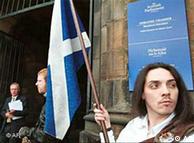
Coinciding with St Andrew’s Day, the Scottish National Party this week announced plans for a referendum on independence from the rest of Britain.

The party has long made breaking with Britain the focus of its political agenda, but even after winning control of the devolved Scottish Parliament in 2007, it has so far lacked the votes needed to make its plan for a referendum a reality. Now though, Alex Salmond, leader of the SNP has launched a white paper setting out the case for a referendum on independence. Earlier, Rob Turner spoke to Professor Christopher Harvie, an SNP member of the Scottish parliament, and asked him if Scots were ready and willing to press for independence?